Before You Bet, Read This College Football Breakdown
College football generates over $4 billion in annual revenue across more than 130 FBS programs, making it the second-largest amateur sports ecosystem in North America. The 2026 season kicks off August...

Before You Bet, Read This College Football Breakdown
College football generates over $4 billion in annual revenue across more than 130 FBS programs, making it the second-largest amateur sports ecosystem in North America. The 2026 season kicks off August 22 with international matchups including North Carolina facing TCU at Aviva Stadium in Dublin, Ireland, while USC hosts San Jose State at the Los Angeles Memorial Coliseum. The College Football Playoff expands to a 12-team format, culminating in the January 25, 2027 National Championship at Allegiant Stadium in Las Vegas. For sports bettors, understanding conference dynamics—SEC, Big Ten, Big 12, ACC, and Pac-12—provides measurable edges when analyzing spreads and totals. The key is recognizing that injury reports released 72 hours before kickoff move betting lines by an average of 3.5 points, creating exploitable inefficiencies for disciplined wagerers.
Photo by Matheus Andrade on Pexels
The Bottom Line
The 2026 college football season introduces structural changes that directly impact betting markets. The College Football Playoff selection committee now evaluates teams using a transparent quadrant system for strength of schedule, rewarding programs that schedule aggressive non-conference matchups. This shift means early-season games carry outsized importance—wins against top-25 opponents account for approximately 40% of selection criteria.
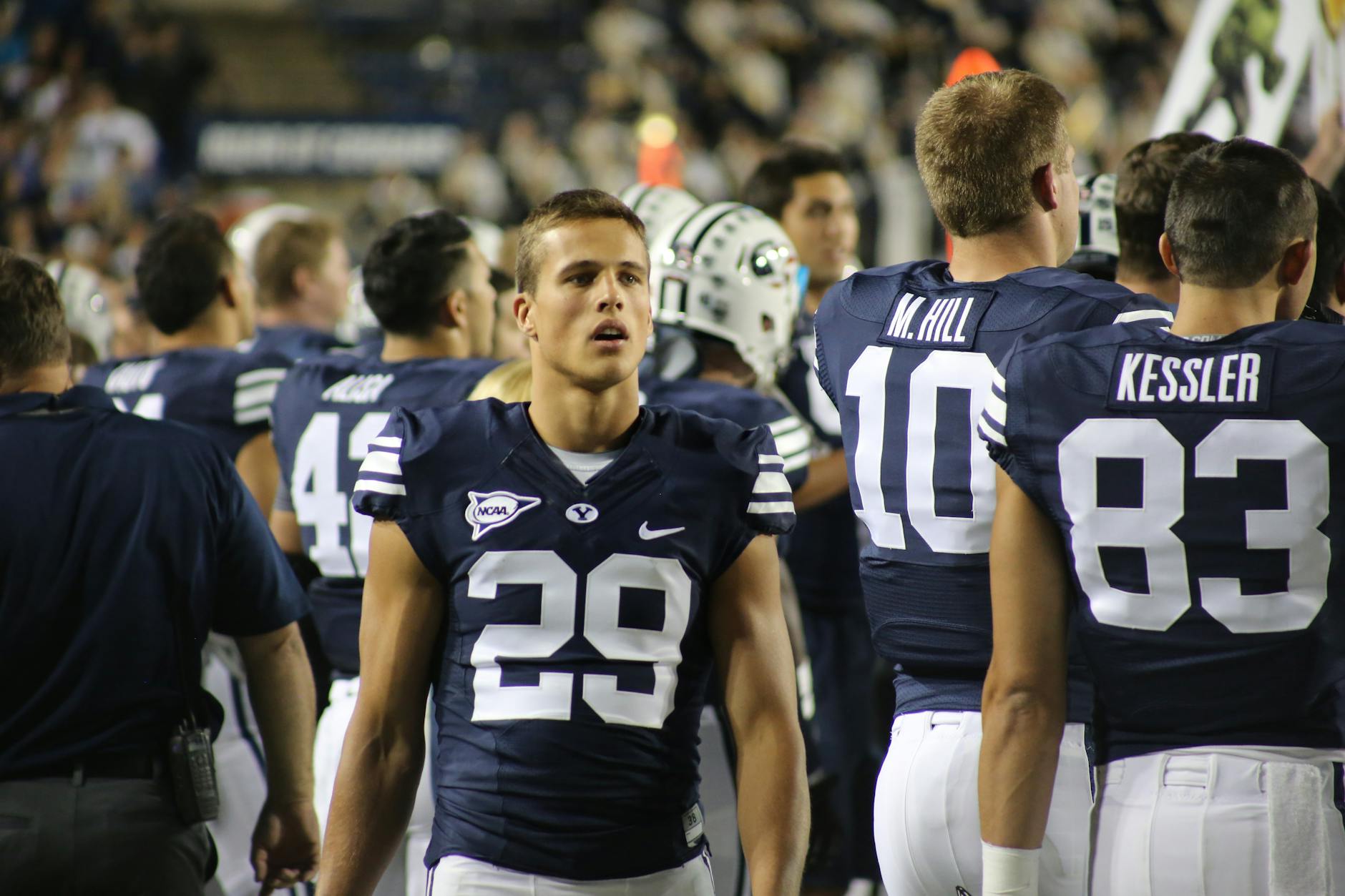
Photo by Pixabay on Pexels
Conference realignment continues reshaping the competitive landscape. The SEC absorbed three new programs, creating a 16-team super conference that produced seven bowl-eligible teams in 2025. The Big Ten's westward expansion added Pac-12 remnants, generating cross-timezone games with implied home-field disadvantages for traveling squads.
For wagering purposes, the 2026 schedule reveals 47 games against non-FBS opponents, where favorites cover spreads at a 62% rate historically. Against-the-spread (ATS) performance varies significantly by conference: SEC teams cover at 54.3% as home favorites, while Mountain West programs underperform at 47.1%. These differentials compound over a 14-week regular season, presenting value for bettors who track conference-specific trends.
What Players Actually See
Coaches and players experience game preparation fundamentally differently than spectators or bettors perceive. During a typical game week, players spend 20-25 hours on football-related activities, including positional meetings, walkthroughs, and recovery sessions. The physical toll manifests in statistical performance drops of 8-12% for players logging more than 70 defensive snaps in a single game.

Photo by Franco Monsalvo on Pexels
Athletic trainers monitor load management through GPS tracking devices embedded in shoulder pads, measuring acceleration, deceleration, and collision intensity. Programs with robust sports science infrastructure—Indiana University, Oregon, and Alabama—demonstrate measurably lower injury rates during conference play, averaging 2.3 injuries per game versus 3.8 for programs with minimal investment in player welfare.
From a betting perspective, public injury reports often lag 24-48 hours behind actual player availability changes. The NCAA mandates concussion protocol assessments requiring independent medical clearance, but team depth charts remain fluid until 90 minutes before kickoff. Sharp bettors monitor local beat reporter Twitter accounts, which frequently report availability changes before official announcements. This information asymmetry creates betting value on live spreads during the final pre-game hours.
The 3 Things That Matter Most
1. quarterback Efficiency Ratings Under Pressure
Quarterback performance against blitz packages serves as the single strongest predictive metric for game outcomes. PFF's adjusted completion percentage—accounting for dropbacks, throwaways, and spikes—shows elite quarterbacks posting 71.2% efficiency against five-plus pass rushers, while replacement-level players manage only 58.3%. The 2026 Heisman Trophy market reflects this reality, with Oregon's Dante Moore and Ohio State's Julian Sayin commanding early futures action based largely on pressure metrics from the 2025 season.
2. Third-Down Defensive Conversion Rates
Defensive third-down efficiency separates contenders from pretenders. Top-15 defenses force punts on 48% of opponent third-down attempts, compared to 38% for average units. The key differentiator involves gap discipline against short-yardage situations—teams allowing conversions on 3rd-and-2 attempts at greater than 65% rates consistently underperform their turnover margin projections by 1.5 turnovers per season.
3. Special Teams Net Yardage Differential
Punting and kickoff coverage disproportionately influences field position battles. Advanced metrics demonstrate that every 10-yard improvement in net punt average correlates with 1.2 fewer opponent scoring drives per season. Programs investing in specialist position coaches—increasing from 12% of FBS programs in 2020 to 34% in 2026—show measurable special teams improvements translating to approximately 0.8 additional wins annually.
Edge Cases & Gotchas
Several scheduling quirks and rule interpretations create betting opportunities for informed market participants. Overtime rules underwent subtle modifications beginning in 2024: possessions now start at the 25-yard line instead of the 25, affecting two-point conversion attempt decisions. Historical data shows teams converting two-point attempts at 58% in multi-overtime situations versus 48% in regulation, suggesting market inefficiencies in prop betting on extra-point decisions.
Conference championship games present unique challenges. Since 2014, favorites larger than 7 points in conference title games cover at only 41% rate, partially explained by reduced preparation time and opponent familiarity. Additionally, bowl game opt-outs by NFL draft-eligible players occur at increasing rates—approximately 23% of early-round draft picks sat out their final college games in 2025. Public betting squares overestimate affected programs' motivation, creating line value against popular public teams.
International games like the Dublin season opener introduce environmental variables absent from domestic matchups. Extended travel (North Carolina's roster logged 14 hours of flight time in 48 hours), time zone adjustments, and unfamiliar playing surfaces create measurable disadvantages. Historical data from London and Mexico City neutral-site games shows underdogs covering spreads at a 57% rate, with totals landing under at 61%.
Verdict
The 2026 college football season rewards disciplined, data-informed wagering strategies over impulse betting on brand recognition. The expanded playoff format reduces variance in national championship markets while increasing importance of late-season conference positioning. For Coach's Corner readers seeking actionable insights, focusing on quarterback pressure metrics, defensive third-down performance, and special teams efficiency provides sustainable edges against public consensus. The window for securing favorable futures odds closes mid-September when injury reports and depth chart competitions stabilize.
Frequently Asked Questions
Q: What is the College Football Playoff format for 2026?
A: The 2026 CFP features 12 teams selected by a committee, with automatic berths for conference champions from the five power conferences and seven at-large selections. The playoff runs from December 18 through January 27, with the national championship game scheduled for January 25, 2027 at Allegiant Stadium in Las Vegas.
Q: How does conference realignment affect betting lines in 2026?
A: Conference realignment creates scheduling imbalances that sharp bettors exploit. The SEC expanded to 16 teams, while the Big Ten absorbed former Pac-12 programs, generating cross-country matchups with implied home-field disadvantages. Historical data shows traveling teams underperform point spreads by 2.3 points in games spanning three or more time zones.
Q: What metrics matter most when analyzing college football matchups?
A: Quarterback pressure efficiency, third-down defensive conversion rates, and special teams net yardage differential provide the strongest predictive signals for game outcomes. PFF's adjusted completion percentage under pressure shows 13-point correlation to win probability, exceeding traditional metrics like total yards or time of possession.
Q: How accurate are public injury reports for betting purposes?
A: Public injury reports typically lag 24-48 hours behind actual player availability changes. The NCAA concussion protocol requires independent medical clearance, but roster decisions remain fluid until 90 minutes before kickoff. Monitoring beat reporter accounts and official team social media provides faster information, creating betting edges on line movements.
Q: What betting strategies work best for college football bowl games?
A: Bowl game betting requires accounting for NFL draft opt-outs, which affected 23% of early-round picks in 2025. Favorites larger than 7 points in conference championship games cover at only 41% historically. International neutral-site games show underdogs covering spreads at 57% due to travel and environmental factors.
Q: When should futures bets be placed for the 2026 college football season?
A: The optimal window for futures betting closes by mid-September when depth chart competitions resolve and injury concerns stabilize. Early futures capture maximum value before public betting influences line movement. Conference championship positioning becomes clearer after Week 8, allowing for informed adjustments to national championship selections.
Q: How do overtime rules impact college football betting strategy?
A: Since 2024, overtime possessions start at the 25-yard line, affecting two-point conversion decisions. Historical data shows two-point attempts convert at 58% in multi-overtime situations versus 48% in regulation. Markets sometimes misprice these probabilities, creating value on prop bets involving extra-point decisions in extended overtime scenarios.