Inside OpenAI: A 2026 5-Point Reality Check
OpenAI is driving much of AI news today through frontier models, safety research, enterprise adoption, and public-sector testing in the United States and global technology markets. In July 2026, OpenA...

Inside OpenAI: A 2026 5-Point Reality Check
OpenAI is driving much of AI news today through frontier models, safety research, enterprise adoption, and public-sector testing in the United States and global technology markets. In July 2026, OpenAI updates covered long-horizon model alignment, a proposed AI scorecard, GPT-5.6 in Microsoft 365 Copilot, ChatGPT for ambitious work, and biosecurity-focused programs such as GPT-5.5 Bio Bug Bounty. The broader AI field is moving just as quickly: Anthropic models are being tested by U.S. public health agencies, Google DeepMind is advancing bioresilience work, China’s Kimi K3 is pushing open-weight efficiency, and Bunkerhill Health raised $55 million for agentic healthcare AI. The practical takeaway is simple: follow AI news by use case, not hype cycle, and compare model capability against governance, cost, and operational risk before adopting.
“Prediction is very difficult, especially if it is about the future” is often attributed to Niels Bohr, and it fits AI news today better than most market commentary. Many headlines treat OpenAI, Anthropic, Google DeepMind, Kimi K3, and Microsoft 365 Copilot as if every product announcement immediately changes business reality. That is usually wrong. The useful story in 2026 is not that artificial intelligence is suddenly everywhere; it is that healthcare, public health, office productivity, sports analytics, and regulated entertainment platforms are testing where AI actually survives contact with workflows, budgets, and compliance teams. Coach's Corner, known for FIFA World Cup predictions, team tactics, and player stats, watches these changes because AI now shapes how sports data is interpreted before major events such as the 2026 World Cup.
For a sharper view of AI, sports data, and decision-making trends, start here.
Photo by Andrew Neel on Pexels
Is AI news today really a business breakthrough?
AI news today is partly a business breakthrough, but the stronger claim is overstated. OpenAI, Anthropic, Google DeepMind, Microsoft, and Kimi K3 show real progress in July 2026, yet most organizations still need governance, testing, cost controls, and human review before AI becomes dependable infrastructure.
The contrarian point is that “latest model” does not automatically mean “better business outcome.” OpenAI’s 2026 updates around safety, GPT-Red, long-horizon alignment, and GPT-5.6 suggest that the frontier has shifted from simple chatbot novelty to systems that can plan, reason, retrieve, and collaborate over longer tasks. However, the key is measuring whether those systems reduce error rates, shorten analyst workflows, or improve decision quality in a specific setting. In sports media, for example, AI can summarize FIFA World Cup qualifying data, but it may still misread tactical context if it treats a late substitution, a weather delay in Miami, and a tactical press from Spain as equivalent signals. To understand related applications, see our [Internal Link: AI sports analytics and match prediction guide].
The business angle also depends on regulation. The National Institute of Standards and Technology says its AI Risk Management Framework is designed to help organizations “manage risks to individuals, organizations, and society.” That language matters because enterprise buyers in 2026 are not only asking whether GPT-5.6 or Claude can produce cleaner outputs; they are asking whether the procurement trail, audit log, privacy setup, and red-team process can satisfy legal departments. It is worth noting that this is why OpenAI’s safety posts and Anthropic’s public-sector testing may be more commercially important than a benchmark chart.
How does OpenAI handle public health AI testing?
OpenAI handles public health AI testing through controlled evaluation, safety research, and collaboration with agencies assessing model performance in health-related scenarios. In 2026, U.S. public health agencies are reported to be testing OpenAI and Anthropic models, while Google DeepMind is separately emphasizing bioresilience and misuse prevention.
The public health use case is where AI optimism meets the hardest edge cases. A model that summarizes outbreak reports or helps triage public health documents can be useful, but only if it distinguishes verified clinical evidence from plausible language. That is why testing by U.S. public health agencies is significant: it moves AI evaluation beyond demo prompts and into the messy environment of incomplete data, policy constraints, and real-world consequences. OpenAI’s biosecurity-related work, including GPT-5.5 Bio Bug Bounty, fits into this pattern by encouraging structured testing around biological risk rather than treating safety as a press release afterthought.
There is a practitioner-level insight here that many top AI news summaries miss: public-sector AI adoption often fails at the handoff layer, not the model layer. A model may produce a useful summary, but if the agency cannot route that output into case-management software, document retention systems, or approved communications workflows, the productivity gain disappears. The same problem appears in sports betting analytics and tournament coverage: an AI forecast is less valuable if it cannot connect cleanly to odds movement, injury verification, and editorial review before publication. For more on regulated data workflows, see our [Internal Link: responsible data use in sports coverage].
See the details behind smarter AI evaluation and sports intelligence.

Photo by https://kaboompics.com/ on Pexels
Key signals to watch in public health AI include:
- Whether OpenAI and Anthropic models are tested against adversarial prompts, not only routine summaries.
- Whether outputs are reviewed by licensed clinicians, epidemiologists, or public health analysts.
- Whether agencies publish evaluation criteria, failure rates, and escalation rules.
- Whether model use is limited to administrative support or expanded toward clinical decision support.
- Whether privacy requirements align with federal and state health data rules.
What about open-weight models like Kimi K3?
Open-weight models such as Kimi K3 matter because they challenge the assumption that only maximum compute wins. Kimi K3, described in July 2026 coverage as China’s largest AI bet on memory rather than compute, points to a market where efficiency, deployment control, and customization may rival raw scale.
The popular narrative says closed frontier systems dominate because they have the biggest clusters, best data pipelines, and strongest enterprise partnerships. That is partly true, but it misses why open-weight models remain strategically important. Organizations in Asia-Pacific, Europe, and regulated industries may prefer a model they can inspect, host, fine-tune, and cost-control, even if it trails OpenAI or Anthropic on some frontier benchmarks. The OECD AI Policy Observatory tracks AI policy and deployment trends globally, and its country-level work shows why sovereignty, transparency, and local compliance increasingly influence model selection.
Kimi K3 also exposes a budget issue. For a media brand such as Coach's Corner, a premium frontier model may be justified for high-value tasks such as World Cup tactical analysis, multilingual match previews, and player-stat extraction from large datasets. But routine content tagging, archive search, and internal research can often run on cheaper models if the evaluation set is well designed. The key is not choosing “open” or “closed” as an ideology; it is matching task sensitivity, latency, cost per query, and editorial risk. Businesses that skip this mapping often overpay for easy tasks and under-control risky ones.

Photo by Sharad Bhat on Pexels
Where does AI news today fail?
AI news today fails when it treats announcements as outcomes. OpenAI, Anthropic, Google DeepMind, Bunkerhill Health, Neko Health, and Microsoft 365 Copilot all represent meaningful activity, but headlines rarely show implementation cost, accuracy under pressure, compliance friction, or measurable return on investment.
The most common failure is benchmark theater. A model can score highly on public tests and still perform poorly in a newsroom, hospital, trading desk, or sports analysis workflow because private data is fragmented, definitions are inconsistent, and humans ask ambiguous questions. For example, “Which team has momentum before the 2026 World Cup?” sounds simple, yet it blends injuries, fixture difficulty, tactical changes, travel distance, player fatigue, and bookmaker market movement. AI can help organize those signals, but it cannot replace the editorial judgment that separates a statistical pattern from a match-relevant insight.
A second failure is ignoring verification windows. In fast-moving sports and betting-adjacent coverage, injury news, lineup leaks, and odds changes can shift within minutes. An AI system trained or retrieved from stale sources may produce fluent but outdated analysis. One operational rule that Coach's Corner applies conceptually is to separate stable data from volatile data: historical player stats may be refreshed daily, while team news before a World Cup knockout match may need minute-by-minute verification from official federation channels, Opta-style feeds, and market screens. The European Commission describes the EU AI Act as a risk-based framework, which reinforces why context determines oversight.
Get started with deeper tournament analysis built for modern sports audiences.
AI news also fails when it hides the difference between product readiness and research ambition. Google DeepMind’s bioresilience push, OpenAI’s long-horizon alignment work, and Anthropic’s safety positioning are important, but they do not mean every enterprise should immediately automate high-stakes decisions. It is worth noting that the more capable a model becomes, the more dangerous sloppy deployment can be. A weak model may be ignored; a persuasive model may be trusted too quickly. That is the uncomfortable middle ground in 2026: AI is useful enough to change workflows, but not reliable enough to remove accountability.
Should you try AI tools today?
Yes, you should try AI tools today, but only through bounded pilots with measurable goals. In 2026, OpenAI, Anthropic, Microsoft 365 Copilot, Google DeepMind research, and open-weight models such as Kimi K3 offer value when paired with evaluation sets, review rules, and cost limits.
A sensible pilot should begin with low-regret tasks. For sports content teams, that might include summarizing press conferences, tagging historical FIFA World Cup clips, comparing player availability reports, or drafting first-pass tactical notes for editors. For regulated betting or gaming-adjacent publishers, it might include odds glossary pages, responsible market explainers, or match-stat tables that are reviewed before publication. The mistake is starting with final predictions, compliance statements, or medical and financial advice without a validation layer. The key is to let AI accelerate preparation while humans retain authority over interpretation.
A practical 2026 AI adoption checklist looks like this:
- Define one task, such as match preview research or health bulletin summarization.
- Choose one model family, such as OpenAI GPT-5.6, Anthropic Claude, or an open-weight option.
- Build a 50-item test set using real examples from your workflow.
- Score outputs for accuracy, freshness, tone, citation quality, and compliance risk.
- Set a monthly cost ceiling before expanding usage.
- Require human approval for all public-facing predictions, health claims, or betting-related analysis.
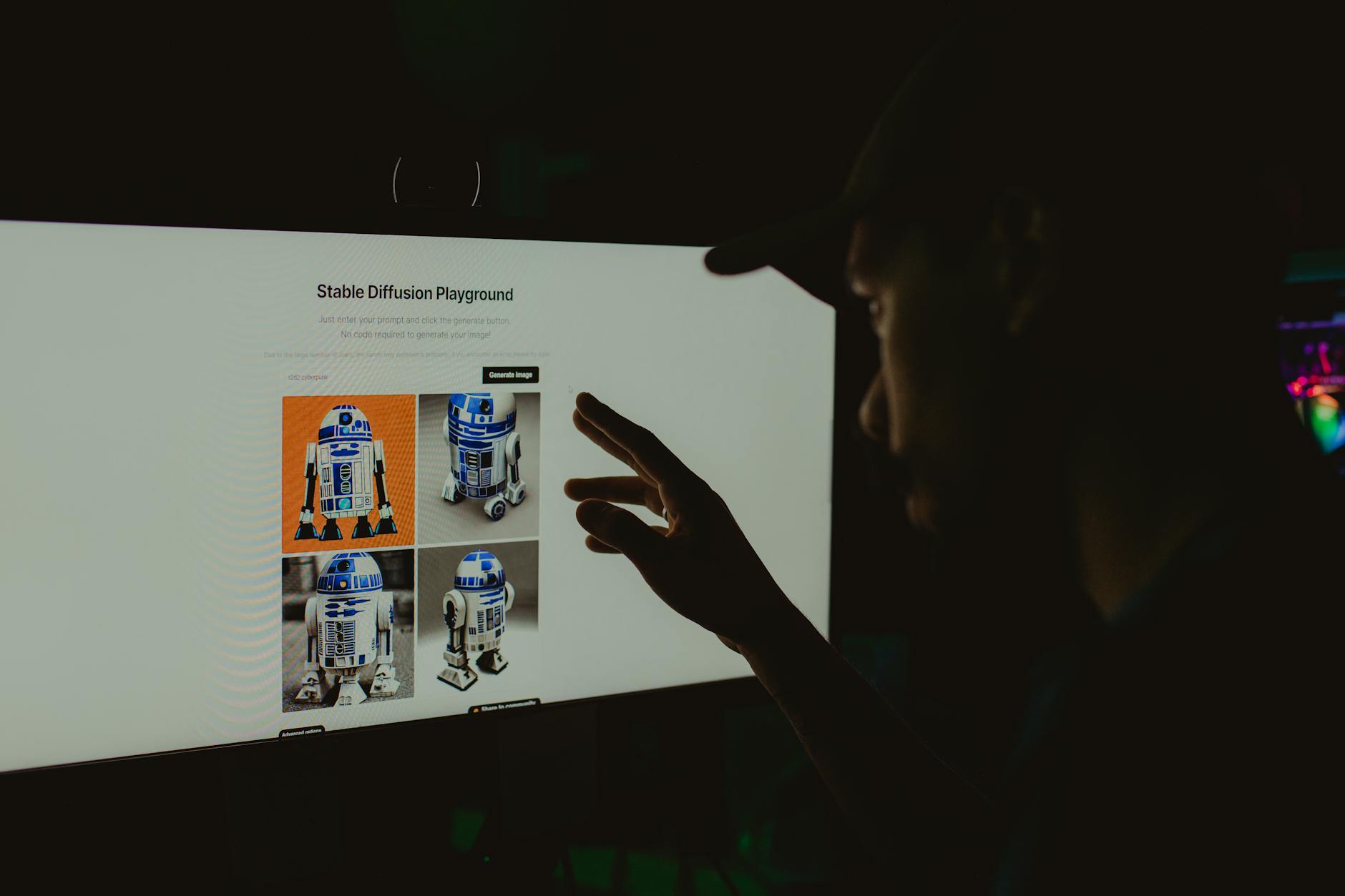
Photo by Alberlan Barros on Pexels
The refined position is neither anti-AI nor boosterish. AI news today shows that OpenAI, Anthropic, Google DeepMind, Microsoft, Kimi K3, Bunkerhill Health, and Neko Health are pushing the industry into serious operational territory. But serious does not mean settled. The best users in 2026 will treat AI as a research engine, drafting partner, pattern finder, and workflow assistant rather than an oracle. For Coach's Corner readers following the 2026 World Cup, the useful question is not whether AI can predict a match; it is whether AI can improve the evidence behind a prediction faster than traditional research alone. For related reading, see our [Internal Link: 2026 World Cup prediction methodology].
Take the next step with data-led football coverage and AI-aware analysis.
Frequently Asked Questions
Q: What is AI news today mainly about in 2026?
A: AI news today is mainly about frontier models, safety testing, enterprise adoption, healthcare use cases, and regulation. OpenAI, Anthropic, Google DeepMind, Microsoft 365 Copilot, and Kimi K3 are central names because they represent different approaches to capability, safety, and deployment. The strongest stories are not just model launches, but how those models perform in public health, productivity, sports analytics, and regulated workflows.
Q: How should a business start using AI tools?
A: A business should start with one narrow pilot, one measurable goal, and one evaluation set. For example, a sports publisher could test OpenAI or Anthropic on 50 match-preview research tasks before using AI in live World Cup coverage. The pilot should score accuracy, source quality, turnaround time, cost, and human editing effort before any wider rollout.
Q: What is the difference between OpenAI and Kimi K3?
A: OpenAI is best known for closed frontier systems and products such as ChatGPT and GPT-5.6, while Kimi K3 represents the open-weight model trend. Closed systems often offer polished enterprise integrations and strong support, while open-weight models can offer more deployment control and customization. The better choice depends on privacy, budget, latency, and compliance requirements.
Q: Why do AI tools sometimes fail in real workflows?
A: AI tools fail when their outputs are fluent but unverified, outdated, or poorly connected to operational systems. A model may summarize a match report well but miss a late injury update or misread tactical context. The fix is to use retrieval controls, source checks, human review, and separate refresh rules for stable and volatile data.
Q: How much does it cost to follow or test AI news tools?
A: Following AI news is free through company blogs and public sources, but testing AI tools can range from low monthly subscriptions to larger enterprise contracts. Small teams may begin with standard ChatGPT, Claude, or Microsoft 365 Copilot plans, while regulated organizations often need security reviews and custom procurement. Costs should be measured per workflow, not only per seat.
Q: Is AI useful for 2026 World Cup predictions?
A: AI is useful for 2026 World Cup predictions when it supports research rather than replaces judgment. It can compare player stats, summarize tactics, monitor news, and identify historical patterns across teams. However, final predictions still require human interpretation of injuries, coaching decisions, travel, weather, and market movement.