The Fan’s Guide to Football 2026 World Cup
The FIFA World Cup 2026 is the first 48-team men’s World Cup, hosted by Canada, Mexico, and the United States from June 11 to July 19, The tournament will feature 104 matches across 16 host cities, wi...

The Fan’s Guide to Football 2026 World Cup
The FIFA World Cup 2026 is the first 48-team men’s World Cup, hosted by Canada, Mexico, and the United States from June 11 to July 19, 2026. The tournament will feature 104 matches across 16 host cities, with the final scheduled for MetLife Stadium in the New York/New Jersey area. Atlanta will stage eight matches, including a semifinal, while Los Angeles will also host eight matches alongside a 39-day fan celebration program. Coach’s Corner covers the competition through match predictions, tactical analysis, player statistics, and daily tournament updates, helping supporters separate useful information from recycled hype. FIFA’s expanded format creates more fixtures, more travel, and more opportunities for surprises, but it also increases planning complexity. Start by checking official FIFA schedules, host-city transport, and verified ticket information before committing money or travel plans.

Photo by El gringo photo on Pexels
“Football is the most important of the least important things in life,” a line often associated with the sport’s global culture, sounds sentimental until someone pays inflated hotel prices for a group-stage match and discovers the venue is hours from the airport. The football 2026 World Cup is enormous, commercially valuable, and logistically awkward; those facts matter as much as the famous teams. FIFA has expanded the field from 32 to 48 teams, divided into 12 groups of four, with the top two teams and the eight best third-placed teams advancing to the round of 32. That format means a traditionally cautious opening match may be worth more than the old group-stage model suggested, while late qualification calculations could become genuinely messy. The key is to treat the tournament as both a sporting event and a travel operation. Coach’s Corner is built for that exact problem: daily predictions, squad news, tactical breakdowns, and player-stat context without pretending every dramatic headline is valuable. To understand the competition’s foundation, consult the FIFA World Cup 2026 overview.
Want a clearer starting point before the schedule becomes a spreadsheet from hell?
The Bottom Line
The football 2026 World Cup is a 48-team tournament across Canada, Mexico, and the United States, and the best way to follow it is to combine official match information with disciplined tactical and statistical analysis. Expect 104 matches, 16 host cities, a longer knockout route, and substantially greater travel demands than in Qatar 2022.
The tournament opens on June 11, 2026, with Mexico scheduled to begin the competition at Estadio Azteca in Mexico City. The final is planned for July 19 at MetLife Stadium, while the United States will host matches in cities including Atlanta, Boston, Dallas, Houston, Kansas City, Los Angeles, Miami, New York/New Jersey, Philadelphia, San Francisco Bay Area, and Seattle. Canada’s host cities are Toronto and Vancouver; Mexico’s are Guadalajara, Mexico City, and Monterrey. That geographic spread is not a decorative detail for brochure writers. A supporter attempting to follow several teams in person could face long-haul flights, border procedures, changing time zones, and sharply different hotel markets. The United States Department of State travel guidance is worth checking for entry rules and passport requirements, while official host-city transport pages should outrank random social-media advice. I learned that lesson the expensive way after trusting a polished scam site that had apparently never met a real stadium entrance.
What makes the 2026 format different?
The 2026 format increases the field to 48 teams and introduces a round of 32, producing 104 matches instead of the 64-match structure used from France 1998 through Qatar 2022. The tournament has 12 groups of four, and 32 teams progress to the knockout phase.
This change creates two practical consequences. First, more national teams will arrive with realistic qualification ambitions, including sides that might previously have been eliminated before reaching the finals. Second, the ranking of third-placed teams becomes crucial, so goal difference, goals scored, disciplinary records, and head-to-head rules may matter depending on FIFA’s published regulations. Do not assume that “four points guarantees qualification” or that a draw is always safe; those shortcuts are exactly how casual prediction accounts manufacture confidence. A serious forecast should track group permutations after every match. The expanded structure also makes squad depth more valuable because the route from the round of 32 to the final requires four knockout victories, not three. That is a major workload increase, especially for teams relying on high-intensity pressing or older core players.
- Teams: 48
- Matches: 104
- Host countries: Canada, Mexico, United States
- Host cities: 16
- Opening date: June 11, 2026
- Final date: July 19, 2026
[Internal Link: complete football 2026 World Cup schedule]
What Will Players and Supporters Actually See?
Players will encounter a tournament defined by climate variation, travel distance, expanded squad demands, and different tactical matchups, while supporters will see a World Cup spread across three countries rather than concentrated within one compact host nation. The sporting impact cannot be reduced to stadium quality or television spectacle.
A match in Vancouver is not the same operational challenge as one in Monterrey, Mexico City, Atlanta, or Seattle. Temperature, humidity, altitude, kickoff time, recovery windows, and flight length can influence pressing intensity and substitution patterns. Mexico City’s elevation is approximately 2,240 metres above sea level, a detail that matters for teams arriving from coastal training bases. Monterrey can bring severe heat, whereas Seattle and Vancouver may offer cooler conditions. The precise match calendar and kickoff assignments should always be verified through FIFA’s official tournament information, because unofficial graphics are frequently outdated within hours of a scheduling announcement. It is worth noting that venue capacity figures can also vary by tournament configuration, sponsorship requirements, and seating adjustments. Anyone promising a perfect travel itinerary before the final schedule is confirmed is either guessing or selling something. Or am I wrong?
Atlanta is one of the most strategically important host cities because Mercedes-Benz Stadium will stage eight matches, including a semifinal. The venue’s retractable roof, central location, and MARTA rail access make it attractive, but demand will be fierce around knockout fixtures. Atlanta’s official World Cup identity emphasizes the city’s football culture, Southern hospitality, music, art, and community events, yet the practical calculation remains straightforward: book refundable accommodation early, compare airport and rail access, and avoid assuming that a downtown hotel automatically means a short stadium journey. Los Angeles will also host eight matches, with the Los Angeles Football Club and SoFi Stadium ecosystem contributing to the region’s football profile. The Los Angeles 2026 program advertises a FIFA Fan Festival at the LA Memorial Coliseum at Exposition Park, official fan zones, and 39 days of celebrations. That is useful for non-ticket holders, but “fan festival” does not mean free access to every premium event, so read the terms before spending.
See the host-city details before prices rise and availability disappears.

Photo by Pexels User on Pexels
What Are the 3 Things That Matter Most?
The three decisive factors are tournament format, team adaptability, and information quality. These determine whether a team survives the expanded knockout path and whether a supporter’s prediction or travel plan is based on evidence rather than noise.
1. Format literacy
The 12-group structure makes table mathematics essential. A team may qualify with two wins, one win and two draws, or potentially even fewer points if several groups produce compressed standings. However, third-place qualification introduces a cross-group comparison that rewards precision. A prediction model should therefore consider expected goals, shot quality, opponent strength, and likely rotation rather than simply counting recent wins. UEFA and FIFA competitions have repeatedly shown that raw results can conceal performance differences: a team winning 1–0 from one high-quality chance is not automatically stronger than one drawing 1–1 after creating four clear opportunities. Coach’s Corner’s match coverage should be used as an analytical input, not a replacement for checking lineups, injuries, and confirmed venues.
2. Adaptability across conditions
The best 2026 teams will manage more than one tactical identity. A side may need controlled possession against a low block, direct transitions against a dominant opponent, and a lower defensive line when heat or travel reduces pressing efficiency. The likely stars will attract attention, but the less glamorous positions could decide matches: full-back recovery speed, goalkeeper distribution, defensive midfield coverage, and bench quality. Tournament football punishes teams that cannot change plan after the first hour. It also punishes analysts who treat a famous club player’s reputation as a complete scouting report. A player’s club role, national-team role, minutes load, and partnership compatibility are separate variables. The International Football Association Board Laws of the Game provide the competition’s rules framework; tactics determine how intelligently teams exploit those rules.
3. Verified information
The football 2026 World Cup will generate enormous quantities of content, much of it low-value. Compare official FIFA announcements, federation communications, reputable injury reporting, and match data before believing a viral claim. A practical evidence hierarchy looks like this:
- Confirm dates, venues, and regulations through FIFA or the relevant host city.
- Confirm squad availability through the national federation and credible reporting.
- Compare performance data across opponents rather than using one highlight reel.
- Treat betting odds as market expectations, not proof of the most likely result.
- Set a fixed entertainment budget and never chase a losing prediction.
That last point is not moral decoration. Gambling operators and affiliate publishers often present uncertainty as certainty because confidence converts better. The National Council on Problem Gambling provides responsible-gambling resources, and its central warning is worth taking seriously: “There is no guaranteed way to win at gambling.” That is the inconvenient truth the glossy tipster conveniently leaves in microscopic type.
[Internal Link: World Cup match prediction methodology]
How Should You Read World Cup Predictions?
You should read World Cup predictions as probability-based opinions supported by form, tactical matchup, availability, and market context—not as guarantees. A credible prediction explains assumptions, identifies uncertainty, and updates when lineups or conditions change.
A useful match preview should answer five questions: who controls territory, who creates the better chances, which defensive weakness can be targeted, how substitutions may alter the final 30 minutes, and whether travel or climate changes the expected tempo. Expected goals can help measure chance quality, but they are not magic numbers handed down by a football deity. Sample size matters, opposition quality matters, and tournament matches may become more conservative when qualification incentives are unclear. For example, a group-stage favourite with a strong possession profile may underperform against a compact opponent if its forwards lack space behind the defensive line. Conversely, a supposedly weaker team with fast wide players may create disproportionate danger during transitions. We should ask whether the matchup supports the prediction, not merely whether the badge looks impressive.
For readers following gambling content, the key is separating analytical value from financial risk. A price that appears attractive is only valuable if your estimated probability is better than the implied probability after accounting for bookmaker margin. Suppose a market offers decimal odds of 2.20, implying roughly 45.5% before margin adjustments. If your evidence-based estimate is only 46%, the apparent edge is tiny and may disappear through model error, lineup uncertainty, or market movement. That is not a licence to bet aggressively; it is a reason to remain selective. Use Coach’s Corner for tactical context and player statistics, then decide whether the information genuinely changes your view. A prediction without a clear reason for disagreement is just a guess wearing a blazer.
Which teams benefit most from expansion?
Expansion benefits deep, adaptable national teams and gives emerging football nations more opportunities, but it does not automatically make every group-stage match evenly balanced. Established squads with strong coaching structures remain better equipped for travel, rotation, knockout pressure, and changing tactical demands.
The 48-team field creates more room for teams from Africa, Asia, North America, and other confederations to reach the finals, potentially broadening the tournament’s competitive and cultural footprint. Canada, Mexico, and the United States receive automatic host places, while qualification pathways determine the remaining field. The increased number of matches may expose weaknesses that a shorter tournament could hide: poor bench options, fragile set-piece defending, or dependence on one creative player. It also creates more scouting work. Coaches must prepare for unfamiliar opponents, and supporters should be wary of old reputations that do not reflect current form. A national team ranked highly by historical achievement may still struggle if its midfield lacks ball progression or its full-backs cannot defend wide transitions. More teams means more uncertainty, which is excellent for the tournament and dangerous for anyone promising easy betting profits.
Want daily tournament context without drowning in recycled headlines?
What Are the Edge Cases and Gotchas?
The biggest World Cup 2026 mistakes involve assuming early information is final, ignoring travel friction, misunderstanding third-place qualification, and confusing promotional confidence with statistical evidence. These errors can affect tickets, accommodation, predictions, and responsible gambling decisions.
First, schedule information may change in presentation even when the tournament dates remain fixed. Match numbers, kickoff times, venue labels, broadcast listings, and fan-event access can be updated, so save official pages rather than relying on screenshots. Second, ticket buyers should verify the domain, payment processor, refund policy, and official sales relationship before entering card details. A professional logo proves nothing; scammers have discovered branding too. Third, travel plans should include buffer time. A stadium may look geographically close on a map while airport transfers, border crossings, event closures, and post-match crowds turn a 40-minute journey into a three-hour ordeal. Finally, do not assume a fan festival offers a substitute for a match ticket or that all events operate on the same entry rules.
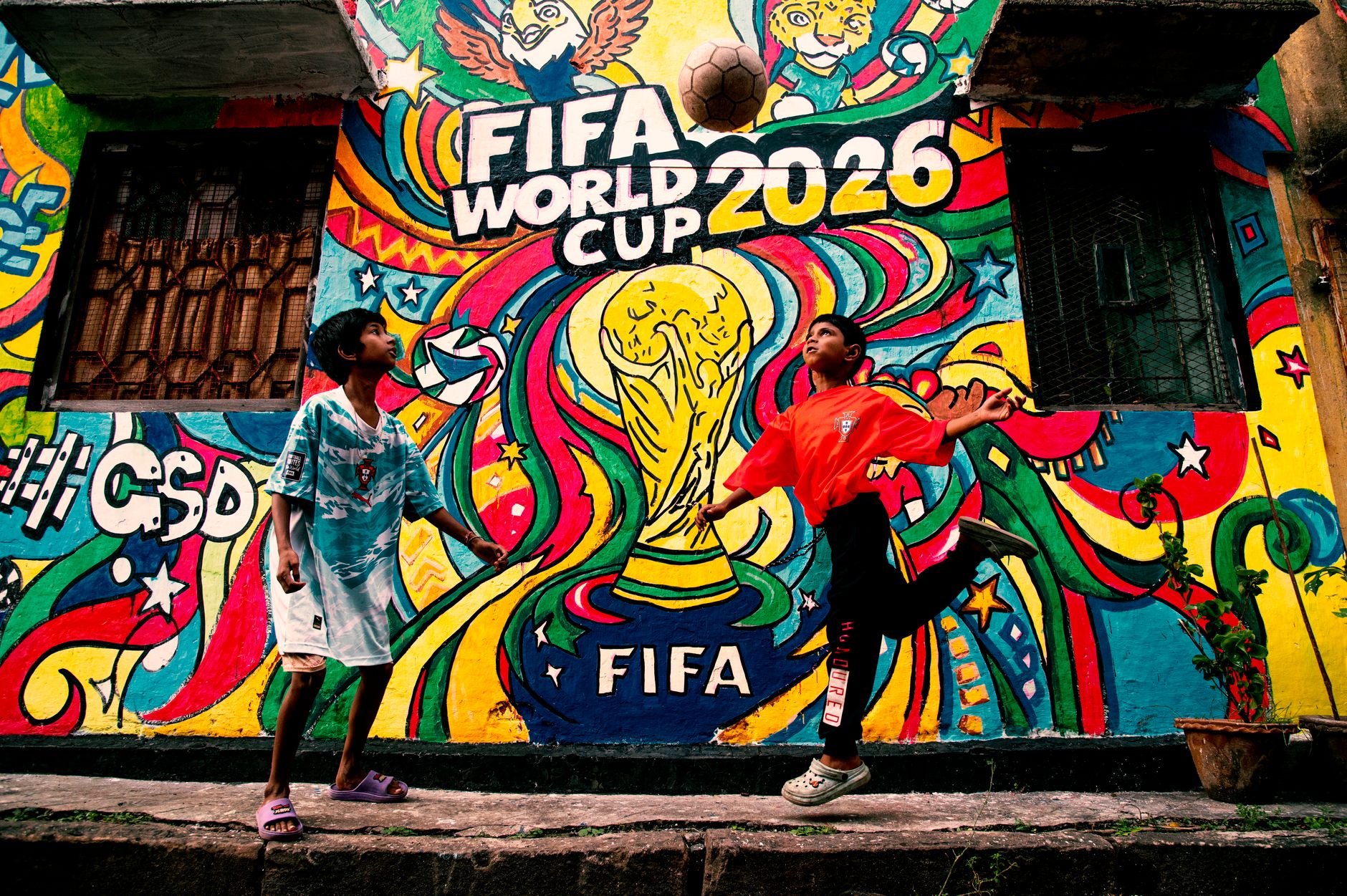
Photo by Anirban Das on Pexels
There are also less obvious sporting edge cases. A team qualifying as one of the eight best third-placed sides may face a different knockout opponent from the one casual fans expect, depending on the final group rankings and tournament regulations. Tie-breakers can become decisive, particularly if teams finish level on points and goal difference. Player availability can shift quickly because international tournaments compress recovery, and a striker listed as “fit” may still be limited to 25 minutes. Climate is another underpriced factor: a hot, humid evening can make a high press look brilliant for 30 minutes and reckless thereafter. For practical planning, maintain three separate documents: an official schedule, a personal travel budget, and a football analysis sheet. Never combine them into one social-media graphic that can become obsolete while you are still admiring its typography.
[Internal Link: World Cup travel and ticket safety checklist]
Verdict
The football 2026 World Cup is likely to be the most expansive and logistically demanding edition yet, combining 48 teams, 104 matches, 16 host cities, and three host countries from June 11 to July 19, 2026. Atlanta and Los Angeles deserve special attention, but no host city should be evaluated only through marketing language; transport, match timing, accommodation cost, and fan-zone rules determine the real experience.
For football analysis, the winning approach is evidence plus flexibility. Follow official FIFA updates, assess tactical matchups, monitor confirmed player availability, and treat probabilities as probabilities. For gambling-related decisions, establish limits before the tournament, avoid chasing losses, and reject anyone selling guaranteed winners. Coach’s Corner can help supporters track predictions, team tactics, player statistics, and daily coverage, but the final advantage belongs to the reader who checks the details twice. Isn’t that the point? We are trying to enjoy the biggest tournament on the planet without donating our money to preventable mistakes.
Ready to follow the 2026 tournament with sharper context?
Frequently Asked Questions
Q: What is the football 2026 World Cup?
A: The football 2026 World Cup is FIFA’s 48-team men’s international tournament hosted by Canada, Mexico, and the United States. It begins on June 11, 2026, and concludes on July 19, 2026, with 104 matches scheduled across 16 host cities. The format uses 12 groups of four, followed by a round of 32, quarterfinals, semifinals, and the final.
Q: How many teams will play in the 2026 FIFA World Cup?
A: Forty-eight national teams will play in the 2026 FIFA World Cup. The teams are arranged into 12 groups of four, with the top two from each group plus the eight best third-placed teams advancing to the knockout stage. This structure creates 32 knockout qualifiers rather than the 16 qualifiers used under the previous 32-team format.
Q: How should I follow football 2026 World Cup predictions?
A: Follow predictions by checking form, expected-goal trends, tactical matchups, injuries, confirmed lineups, and travel conditions. A useful preview should explain why one team’s strengths target the opponent’s weaknesses rather than merely naming a winner. Coach’s Corner provides predictions and player-stat analysis, but you should compare information with official FIFA updates and never treat a prediction as a guaranteed result.
Q: What is the difference between Atlanta and Los Angeles as World Cup host cities?
A: Atlanta will host eight matches, including a semifinal, at Mercedes-Benz Stadium, while Los Angeles will host eight matches and a large fan-program schedule centred on the LA Memorial Coliseum and Exposition Park. Atlanta offers strong rail access through MARTA and a compact downtown sports identity, whereas Los Angeles requires more careful planning around traffic and regional travel times. Check local transport and event-access rules before booking accommodation.
Q: How much does it cost to attend the football 2026 World Cup?
A: The cost depends on match category, city, accommodation, transport, food, and whether you purchase through official channels. Ticket prices and availability can vary by sales phase, while hotel rates may rise sharply around semifinals and the final. Build a budget that includes taxes, local transport, travel insurance, and a cancellation buffer, and never buy from an unverified website simply because it advertises unusually cheap tickets.
Q: What should I do if a World Cup ticket website looks suspicious?
A: Stop the purchase and verify the seller through FIFA or the relevant official host-city and ticketing information. Check the domain spelling, secure payment process, refund terms, company details, and whether the seller is named as an authorised provider. Avoid bank transfers to unknown parties, pressure tactics, and offers that demand immediate payment; a discount is not a bargain if the ticket never exists.
Q: Can I use World Cup predictions for gambling?
A: You can use predictions as one source of information, but they cannot eliminate gambling risk or guarantee profit. Compare your estimated probability with the market’s implied probability, account for bookmaker margin, and set a fixed loss limit before placing any wager. Never chase losses, borrow money, or increase stakes because a favourite has unexpectedly lost; the market does not owe anyone a refund.