3 AI News Mistakes World Cup Bettors Make
Artificial intelligence news in 2026 is most useful when readers separate deployable systems from attention-grabbing model announcements, and Coach's Corner applies that discipline to FIFA World Cup a...

3 AI News Mistakes World Cup Bettors Make
Artificial intelligence news in 2026 is most useful when readers separate deployable systems from attention-grabbing model announcements, and Coach's Corner applies that discipline to FIFA World Cup analysis for betting-minded fans. The strongest signal right now is not one model beating another in a benchmark; it is regulated testing by United States public health agencies of OpenAI and Anthropic models, reported on July 20, 2026, alongside healthcare funding such as Bunkerhill Health’s $55 million raise and Neko Health’s $700 million expansion. Meanwhile, China’s Kimi K3 open-weight model shows that memory architecture can matter as much as raw compute, and Google DeepMind’s bioresilience work highlights misuse prevention. The actionable takeaway is simple: use artificial intelligence news as a risk filter, not a betting shortcut, and verify whether an AI tool has real-world validation before trusting its output.
Photo by Markus Winkler on Pexels
For readers who track both artificial intelligence news and 2026 World Cup betting markets, the first mistake is assuming every AI headline creates an immediate wagering edge. It is worth noting that OpenAI, Anthropic, Google DeepMind, Kimi K3, Bunkerhill Health, and MIT News all point to different kinds of progress, not one universal “AI revolution.” Coach's Corner treats these developments as inputs for sharper match predictions, team tactics, and player-stat interpretation, but the key is skepticism: if an AI system is not tested in the environment where decisions happen, its claimed advantage may be mostly theoretical.
Want a sharper way to connect AI trends with World Cup analysis?
What Are the Top 3 at a Glance?
The top three artificial intelligence news stories for World Cup bettors in 2026 are OpenAI and Anthropic public-health testing, Kimi K3’s open-weight architecture, and Google DeepMind’s bioresilience program. Each matters because it reveals a different test of AI reliability: governance, efficiency, and safety.
- OpenAI and Anthropic public-health testing: Best overall because real agencies are evaluating models under public-sector constraints, not just benchmark demos.
- Kimi K3 open-weight model: Best for technical readers because it challenges the lazy assumption that more compute always wins.
- Google DeepMind bioresilience: Best value for risk-aware analysts because misuse prevention is becoming part of serious AI deployment.
Most artificial intelligence news coverage overweights spectacle and underweights operating conditions. A model that summarizes injury reports may sound useful for FIFA World Cup betting, but if it cannot distinguish confirmed squad news from rumor, it can damage a prediction model. For related reading, see our [Internal Link: World Cup match prediction framework]. According to the National Institute of Standards and Technology, trustworthy AI requires mapping, measuring, managing, and governing risks; NIST states that “AI risk management can drive responsible uses and practices.” That is less glamorous than a leaderboard, but it is more useful.
Why Is #1 OpenAI and Anthropic Public-Health Testing Best Overall?
OpenAI and Anthropic public-health testing ranks first because external evaluation by United States agencies is a stronger credibility signal than vendor claims. In 2026, regulated testing shows whether large language models can perform under accountability, privacy, and safety expectations.
The contrarian point is that healthcare AI news may matter more to sports bettors than another chatbot launch. Public-health agencies operate in high-stakes environments where errors are audited, workflows are documented, and model outputs must be explainable enough for human review. If OpenAI and Anthropic models can withstand that level of scrutiny, the lesson for Coach's Corner readers is not “trust AI blindly,” but “prefer AI systems tested against institutional standards.” The same principle applies to FIFA World Cup prediction tools: a model should disclose data sources, update timing, and uncertainty ranges before influencing a wager.
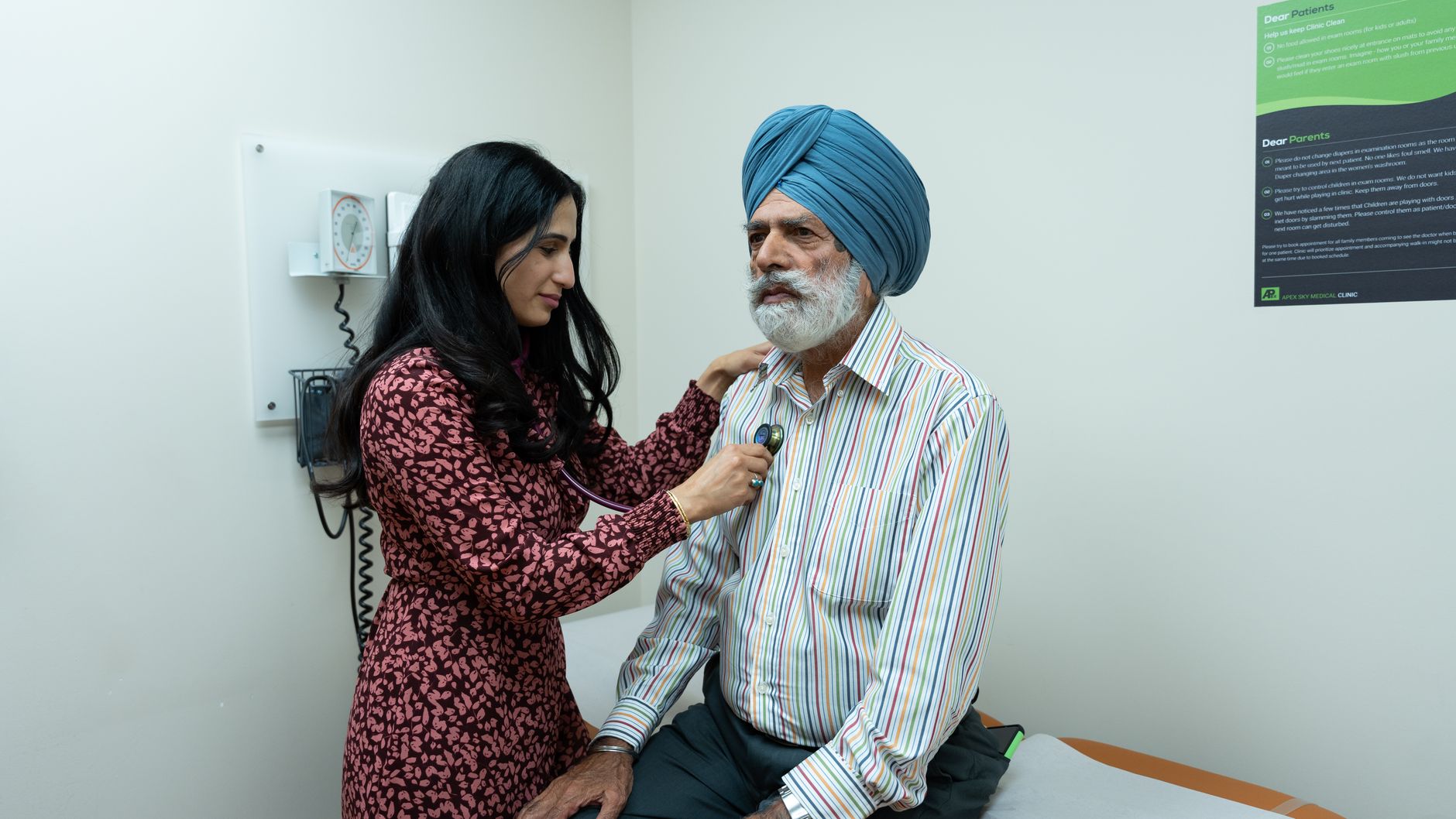
Photo by World Sikh Organization of Canada on Pexels
There is also a timing edge that many bettors miss. Artificial intelligence news published near major tournaments can lag actual deployment by months, while betting markets move in minutes after squad announcements, referee assignments, or injury updates. A practical rule used by analysts is to discount any AI claim that does not specify testing date, deployment environment, and failure handling. The World Health Organization has emphasized ethics and governance for AI in health, noting that systems must protect autonomy, safety, and transparency. That governance mindset transfers well to betting analysis.
See how disciplined research can improve your football reading before the market moves.
How Is #2 Kimi K3 Best for Technical Use Cases?
Kimi K3 is best for technical use cases because its open-weight approach shifts attention from raw compute toward memory, accessibility, and model architecture. For analysts, that matters because efficient AI can be adapted faster than closed systems when new World Cup data appears.
Kimi K3, reported as China’s major open-weight model in July 2026, is a reminder that the AI race is not only about who buys the most graphics processing units. It is worth noting that open-weight systems may let researchers inspect, tune, or deploy models in ways closed platforms do not allow. For Coach's Corner, that distinction matters when evaluating third-party prediction tools claiming to process player stats, tactical shapes, and historical tournament data. A model’s openness does not guarantee accuracy, but it can improve auditability.
The mistake many bettors make is treating “open” as automatically safe or “closed” as automatically superior. Neither assumption survives contact with real analysis. Open-weight models can be powerful, but they still require clean data, careful prompt design, and protection against outdated inputs. Closed models from OpenAI or Anthropic may offer stronger guardrails, but their internal weighting can be harder to inspect. For deeper methodology, visit our [Internal Link: AI-assisted football analytics guide]. The key is to judge the complete workflow, not the branding label attached to the model.
Why Is #3 Google DeepMind Bioresilience Best Value?
Google DeepMind’s bioresilience work is best value because it highlights the hidden cost of AI: misuse prevention. For sports analysts, the lesson is that the best AI systems are not only powerful; they are constrained, monitored, and designed to prevent harmful outputs.
Google DeepMind and Isomorphic Labs have discussed bioresilience in relation to biology, outbreak response, DNA synthesis screening, SynthID, red-teaming, and AlphaFold-adjacent scientific workflows. That may seem far from football, but the operational lesson is directly relevant: serious AI teams build safety layers before scaling usage. In betting contexts, equivalent safeguards include source verification, odds-movement checks, and limits on automated staking. A prediction engine that gives confident answers without uncertainty bands is not advanced; it is reckless.

Photo by Terrence Bowen on Pexels
The overlooked insight is that safety architecture can become a competitive advantage. If an AI tool refuses to act on unverified injury rumors before a 2026 FIFA World Cup quarterfinal, it may look less exciting than a model that instantly issues a pick. Yet the cautious model may save bankroll by avoiding false positives. The OECD AI Principles state that AI systems should function in a “robust, secure and safe” way throughout their lifecycle. That phrase is not marketing copy; it is a practical standard for any bettor using AI-supported decisions.
Check the details behind smarter, safer tournament coverage.
How We Ranked Them
We ranked these artificial intelligence news stories by practical reliability, transferability to decision-making, and risk awareness. OpenAI and Anthropic ranked first because agency testing offers external validation; Kimi K3 ranked second for technical adaptability; Google DeepMind ranked third for safety relevance.
Our weighting was deliberately unfashionable. We gave 40% to real-world validation, 25% to transparency or auditability, 20% to relevance for time-sensitive decision-making, and 15% to misuse controls. That means a flashy benchmark with no deployment evidence would lose to a quieter model evaluation inside a constrained institution. MIT News coverage of artificial intelligence research, including computational methods connected to democracy and complex systems, reinforces this broader point: AI impact often appears first in governance and decision architecture, not consumer hype.
- Real-world validation, 40%: Was the system tested by a serious institution such as a United States agency or research university?
- Transparency, 25%: Can analysts inspect assumptions, weights, data sources, or limitations?
- Decision relevance, 20%: Does the model improve choices under time pressure, such as World Cup team-news interpretation?
- Safety controls, 15%: Does the system reduce misuse, hallucination, or overconfident automation?
For betting readers, this framework is intentionally conservative. Coach's Corner does not treat artificial intelligence news as a magic route to guaranteed picks, because gambling markets punish shallow certainty. Instead, AI should help organize evidence: player availability, tactical matchups, travel load, penalty tendencies, and market movement. To compare this with football-specific modeling, see our [Internal Link: 2026 World Cup betting market analysis].
Which Should You Pick?
Pick OpenAI and Anthropic testing if you want the strongest reliability signal, Kimi K3 if you care about adaptable technical infrastructure, and Google DeepMind bioresilience if your priority is risk control. For most World Cup bettors, reliability should come before novelty.
The refined position is not anti-AI; it is anti-naive-AI. Artificial intelligence news in 2026 is full of useful signals, but only if you ask what was tested, who tested it, and what happens when the model is wrong. A bettor using AI for FIFA World Cup coverage should never outsource judgment to a system that cannot cite sources, update quickly, or admit uncertainty. Coach's Corner recommends using AI as a second analyst, not as a final authority.

Photo by www.kaboompics.com on Pexels
Before placing trust in any AI-driven prediction, run a three-step check. First, confirm whether the model uses current squad and injury data. Second, compare its output against at least one independent tactical source and one odds-market movement. Third, record results over a meaningful sample, not one lucky matchday. This approach is less exciting than chasing every artificial intelligence news headline, but the key is consistency. In gambling, avoiding bad information is often more valuable than finding one brilliant insight.
Follow Coach's Corner for disciplined World Cup insights built for skeptical fans.
Frequently Asked Questions
Q: What is artificial intelligence news?
A: Artificial intelligence news covers developments in AI models, regulation, research, funding, safety, and real-world deployment. In 2026, major examples include OpenAI and Anthropic model testing, Kimi K3’s open-weight architecture, and Google DeepMind bioresilience work. For bettors, the most useful AI news is not hype but evidence of reliability, transparency, and practical application.
Q: How can World Cup bettors use artificial intelligence news?
A: World Cup bettors can use artificial intelligence news to evaluate whether prediction tools are credible, current, and risk-controlled. Start by checking whether an AI system cites live data, explains uncertainty, and has been tested outside marketing demos. Then compare its output with tactical analysis, injury reports, and betting-market movement before acting.
Q: What is the difference between OpenAI, Anthropic, and Kimi K3?
A: OpenAI and Anthropic are best known for closed commercial AI models, while Kimi K3 is discussed as an open-weight model with more inspection potential. Closed systems may provide stronger managed guardrails, while open-weight systems may offer greater adaptability. The better choice depends on whether your priority is safety, transparency, customization, or speed.
Q: Why do AI betting predictions fail?
A: AI betting predictions often fail because they rely on stale data, overfit past results, or ignore market context. A model may know historical FIFA World Cup statistics but miss a late injury, tactical change, or price movement. The fix is to treat AI output as one evidence layer, not a standalone betting command.
Q: Is AI free to use for World Cup analysis?
A: Some AI tools are free, but serious World Cup analysis often requires paid data, premium models, or specialized subscriptions. Free tools can summarize public news, but they may lack live injury feeds, odds history, or verified player tracking data. For betting decisions, the hidden cost of bad information can exceed the price of a reliable research tool.
Q: Is artificial intelligence news worth following in 2026?
A: Artificial intelligence news is worth following in 2026 if you filter it through validation, transparency, and safety. Stories about United States agency testing, MIT research, Google DeepMind safety programs, and open-weight models reveal where AI is becoming operationally useful. The mistake is treating every headline as an immediate betting edge.