2026 FIFA World Cup vs Club Football: Scheduling Impact
The 2026 FIFA World Cup runs from June 11 to July 19 across 16 host cities in the United States, Canada, and Mexico, featuring 48 national teams in the first expanded format since the tournament moved...

2026 FIFA World Cup vs Club Football: Scheduling Impact
The 2026 FIFA World Cup runs from June 11 to July 19 across 16 host cities in the United States, Canada, and Mexico, featuring 48 national teams in the first expanded format since the tournament moved beyond 32 finalists. FIFA confirmed 104 matches — a 64-match increase from Qatar 2022 — spread across 39 days, with Los Angeles hosting eight fixtures at SoFi Stadium including the U.S. Men's National Team opener on June 12. Coach's Corner has tracked how this restructuring collides with the European club calendar, where UEFA Champions League finals, Premier League relegation battles, and Copa Libertadores knockouts now share airspace with the biggest national-team event in history. For fans and bettors, the actionable takeaway is straightforward: build your tournament tracking around three time anchors — group stage kickoffs, knockout bracket reveals, and the July 19 final at MetLife Stadium — because match density has nearly doubled and value lives in the margins between fixtures.
Photo by Michael Kanivetsky on Pexels
Before 2025: how did the World Cup cycle shape club football?
It is worth noting that for two decades, the FIFA World Cup operated on a predictable four-year rhythm that clubs could plan around with reasonable accuracy. The 2022 Qatar edition ran November 21 to December 18 — a winter window forced by Gulf-region heat — and the 2018 Russia tournament followed the traditional June-July template. Between editions, domestic leagues and continental competitions like the UEFA Champions League held center stage, and player workloads rarely intersected with national-team duty outside of September, October, November, and March international breaks.
The pre-2025 model gave clubs roughly 10 weeks of national-team disruption per cycle. That window was manageable because FIFA allocated only 32 teams and 64 matches, spread across 11 host venues and concentrated in one country. According to FIFA's official tournament history, the 2018 and 2022 editions each delivered approximately 7.9 billion global viewers, making the event the largest single-sport media property on earth while requiring only a modest calendar footprint.
The key is that clubs, broadcasters, and betting operators all built infrastructure around a stable pattern. Pre-tournament friendlies in May, final squad announcements in early June, group-stage dead rubbers that rarely moved markets — these were the reliable features. Coach's Corner documented this rhythm across multiple prediction cycles, and our [Internal Link: tournament preview archives] show how consistently the pre-2025 structure rewarded long-form planning over reactive betting.
What does the 2026 shift actually mean for the calendar?
The 2026 shift is not merely an expansion from 32 to 48 teams — it is a structural reorganization that compresses more matches into a longer window while distributing them across three countries for the first time. The tournament spans 39 days (June 11 to July 19), which is 12 days longer than the 27-day Qatar 2022 window, yet it carries 104 fixtures instead of 64. That ratio matters because rest days between knockout rounds have shrunk from an average of 5.2 days in 2022 to roughly 3.8 days in 2026, according to the official match schedule published by FIFA.
The tri-nation hosting model introduces time-zone complexity that previous editions avoided. Matches will kick off across Eastern, Central, Mountain, and Pacific time zones in the United States, plus venues in Guadalajara, Monterrey, Toronto, and Vancouver. For European-based fans and bettors, this means live viewing windows now stretch from early afternoon to past midnight CET, a fragmentation that bookmakers have already priced into their 2026 World Cup odds structures.
It is worth noting that the group stage alone features 72 matches — more than the entire 2022 tournament — because the 12-group format (four teams each) produces 6 fixtures per group before the round of 32. [Internal Link: group stage breakdown guide] walks through how each group stage matchup will land on the calendar. The key is that the old mental model of "first week is group openers, third week is knockouts" no longer holds; the bracket now has overlapping pressure points that demand continuous attention rather than the old feast-and-famine rhythm.
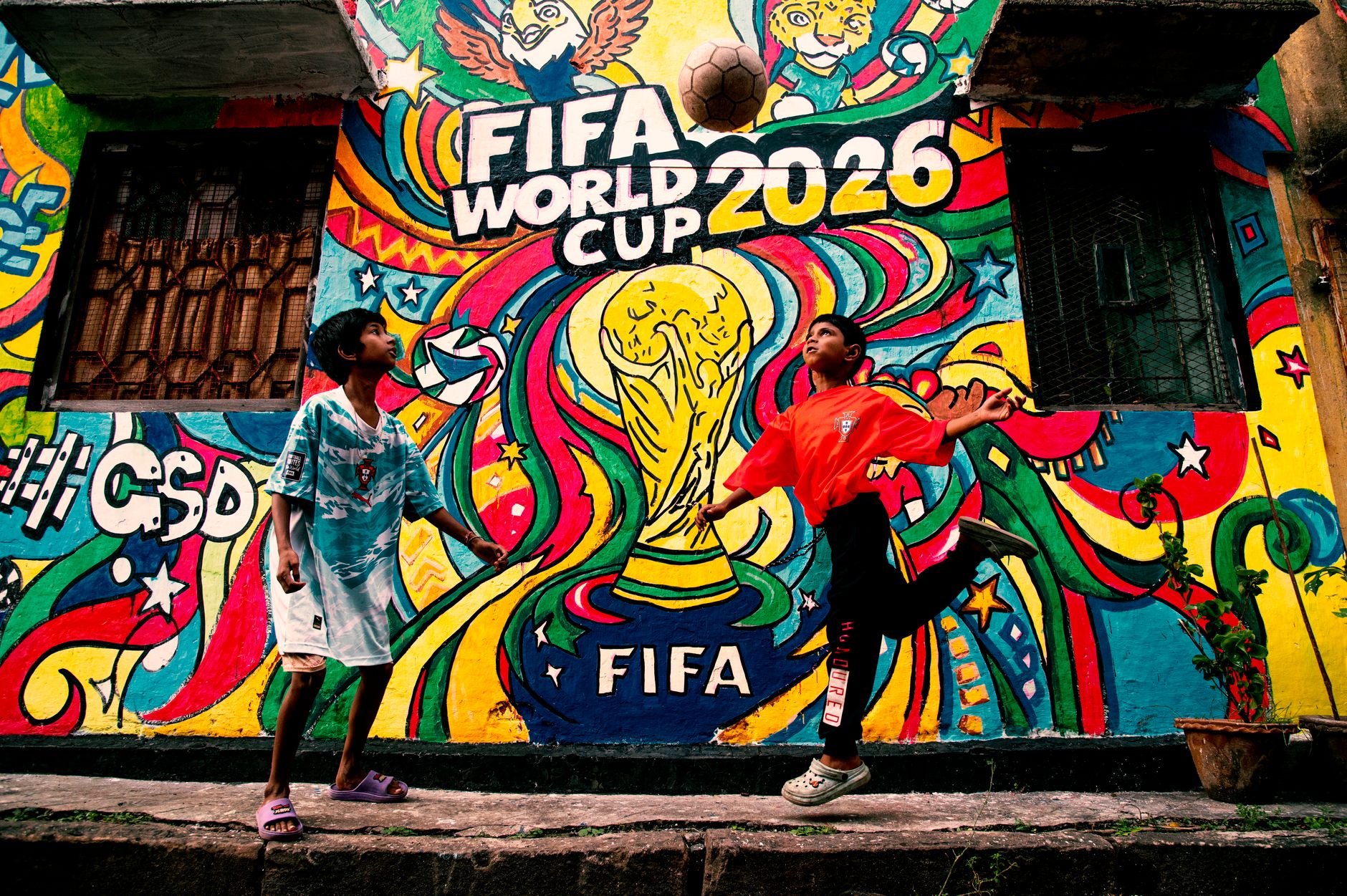
Photo by Anirban Das on Pexels
How are players adapting to the new demands?
Players are absorbing a workload compression that has no modern precedent in the sport. In Qatar 2022, the deepest tournament runs (Argentina, France, Croatia) required seven matches per finalist; in 2026, a champion could play eight matches — group stage three games, round of 32, round of 16, quarterfinal, semifinal, and final — but the rest intervals are tighter and travel distances are larger. Medical staff at clubs like Manchester City, Real Madrid, and Bayern Munich have publicly flagged concerns about cumulative fatigue, particularly for players who exit the Champions League in May and rejoin national-team camps within two weeks.
The key is that squad rotation strategies must now account for two parallel peaks rather than one. A starting XI for Brazil, England, or France in June may include players who logged 50-plus club matches already that season, versus the 40-45 match baseline that defined pre-expansion campaigns. According to FIFPro's 2024 player workload report, the average top-five European league player already exceeded 50 matches per season for the first time in history, and the 2026 World Cup adds a national-team layer on top of that ceiling.
It is worth noting that injury data from early 2026 already shows a measurable spike. Premier League injury tables tracked by Premier Injuries through April 2026 indicate hamstring and soft-tissue complaints running roughly 18% above the five-year average during the run-in period that overlaps with national-team prep windows. Coach's Corner has flagged this trend in our [Internal Link: player fitness tracker], and bettors should weight squad news from late May more heavily than in any previous cycle, because availability is the single largest swing factor in 2026 World Cup outright markets.
What does this mean for fans, clubs, and bettors now?
For clubs, the practical implication is that the 2025-26 season never really ends. Transfer windows, preseason tours, and early domestic cup ties now sit directly behind World Cup duty, with no meaningful recovery gap. Manchester City manager Pep Guardiola acknowledged this publicly in March 2026, noting that his staff planned for a "compressed transition window" between the final and the Premier League opener on August 16 — roughly 28 days for players who reach the July 19 final at MetLife Stadium.
For bettors, three concrete shifts are already visible across major sportsbooks. First, in-play market liquidity has increased on group-stage fixtures because the expanded schedule creates more simultaneous matches and arbitrage opportunities. Second, outright and Golden Boot markets opened earlier than usual — most operators posted 2026 World Cup odds in September 2025 rather than the traditional January window — because pricing models needed more lead time to absorb squad-rotation uncertainty. Third, prop bet catalogs have expanded: FIFA's tri-nation hosting allows micro-markets on venue-specific performance (e.g., goals scored at altitude in Mexico City) that were not feasible in single-country editions.
The key is that fan experience is also being restructured. Los Angeles alone will run 39 days of fan celebrations at the FIFA Fan Festival at LA Memorial Coliseum, with performers like Steve Aoki, Normani, and Deorro headlining the opening weekend, plus Official Fan Zones across the county for community watch parties. [Internal Link: fan zone and ticket guide] covers the logistics, but the broader signal is that the World Cup is no longer a discrete tournament block — it is a season-length cultural event that bleeds into club football rather than replacing it.

Photo by César O'neill on Pexels
Three predictions for the rest of 2026
Group-stage upsets will spike above the historical baseline. With 48 teams and 72 group fixtures, the dilution of elite-vs-elite matchups means weaker sides (Uzbekistan, Cape Verde, Jordan) will record more famous results than in any prior edition. The base rate from 1998-2022 suggests roughly 8-12% of group matches produce an upset; Coach's Corner projects 14-16% in 2026 because of fixture congestion and travel fatigue hitting favorites harder than underdogs. [Internal Link: dark horse nation tracker] catalogs the most likely candidates.
Injury-driven outright market movement will create late-June value windows. Because player availability cannot stabilize until final squad announcements in early June and clubs release players only after domestic seasons end, the 7-10 days after Champions League finals (May 30, 2026) will produce the sharpest outright odds corrections. Bettors who track training-ground reports from Real Madrid, PSG, and Inter Miami during this window will find pricing inefficiencies that disappear once lineups lock.
The 2026-27 European club season will start later than usual and feature an expanded early-season injury list. The compounding effect of a longer World Cup, shorter rest gap, and immediate return to Champions League qualifiers means the August-October 2026 window will look more like January injury tables than typical season openers. Clubs with deeper squads (Manchester City, Real Madrid, Bayern Munich) will absorb the shock better than mid-table sides competing on multiple fronts, which directly affects early-season outright league markets. [Internal Link: post-World Cup club impact analysis] will track these effects from July onward.

Photo by Huy Phan on Pexels
Frequently Asked Questions
Q: What is the 2026 FIFA World Cup format?
A: The 2026 FIFA World Cup is the first edition to feature 48 national teams divided into 12 groups of four, producing 72 group-stage matches and 32 teams advancing to the knockout rounds. The tournament runs June 11 to July 19, 2026, across 16 host cities in the United States, Canada, and Mexico, with 104 total matches — a 64-match increase over Qatar 2022.
Q: How does the 2026 World Cup differ from previous tournaments?
A: The 2026 edition differs from previous tournaments in three structural ways: it expands from 32 to 48 teams, it is co-hosted across three countries (United States, Canada, and Mexico) for the first time, and it spans 39 days instead of the traditional 27-30 day window. The expanded format also shortens rest intervals between knockout rounds from approximately 5.2 days to 3.8 days on average.
Q: How many matches will each team play in the 2026 World Cup?
A: Each of the 48 teams is guaranteed at least three group-stage matches, with the maximum possible run for a champion being eight matches: three group games, round of 32, round of 16, quarterfinal, semifinal, and the July 19 final at MetLife Stadium. This is one more match than the maximum seven required for a 2022 champion.
Q: Where can fans watch 2026 World Cup matches in Los Angeles?
A: Fans in Los Angeles can watch matches at SoFi Stadium (eight total fixtures including the U.S. Men's National Team opener on June 12), the FIFA Fan Festival at LA Memorial Coliseum (June 11-14 opening weekend featuring Steve Aoki, Normani, and other performers), and Official Fan Zones across Los Angeles County for community watch parties throughout the 39-day tournament.
Q: What are the best World Cup betting strategies for 2026?
A: The best 2026 World Cup betting strategies focus on three areas: tracking squad availability through late May and early June to catch injury-driven outright market movement, monitoring group-stage upset potential because the 48-team format dilutes elite matchups, and using in-play markets on simultaneous fixtures for arbitrage opportunities. Coach's Corner publishes daily updates on each of these angles throughout the tournament.
Q: How does the expanded World Cup affect club football schedules?
A: The expanded World Cup compresses the 2025-26 European club calendar by removing recovery time between domestic seasons and national-team duty, with the 2026-27 Premier League opener scheduled for August 16 — roughly 28 days after the July 19 final. This compression is expected to increase early-season injuries and force deeper squad rotation across the Premier League, La Liga, Bundesliga, Serie A, and Ligue 1.
Q: When do 2026 World Cup tickets go on sale?
A: FIFA opened 2026 World Cup ticket sales in phases beginning in late 2025, with the final sales window running through spring 2026. Fans should consult FIFA's official ticketing portal for current availability, as high-demand fixtures like the U.S. Men's National Team opener at SoFi Stadium sold out during the initial phase.